Two people drink the same amount on the same night. One tests negative the next afternoon. The other tests positive. The only difference: their programs use different EtG cutoff levels.
The cutoff level - the concentration threshold that separates a positive result from a negative one - changes the detection window more than most people realize. Understanding the difference between 100 and 500 ng/mL is essential if you're subject to any form of alcohol monitoring.
What Is a Cutoff Level?
EtG urine tests don't just detect presence or absence - they measure concentration in nanograms per milliliter (ng/mL). A cutoff is the threshold above which the lab calls the result positive. Below the threshold, the result is negative - even if there's some EtG in the sample.
Think of it like a minimum height requirement. The EtG is there in both cases; it's the bar that determines whether it counts.
500 ng/mL - The Standard Cutoff
The 500 ng/mL cutoff is used in most workplace drug testing panels, pre-employment screenings, and general clinical EtG tests. SAMHSA's mandatory guidelines for federal workplace drug testing establish this as the standard threshold.
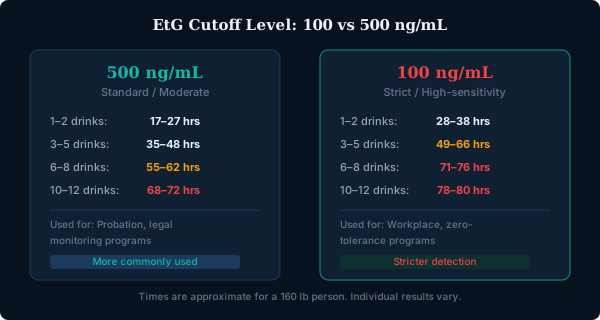
At 500 ng/mL, light-to-moderate drinking typically clears within 24-48 hours:
These are the numbers most people think of when they consider "how long EtG lasts." They're accurate - for a 500 ng/mL test. But they underestimate the window significantly for stricter programs.
100 ng/mL - The Strict Cutoff
The 100 ng/mL cutoff is used in programs that require near-complete abstinence confirmation. This includes probation and parole alcohol monitoring, drug courts, SCRAM alternative monitoring programs, alcohol treatment program compliance testing, and some DUI diversion programs.
At 100 ng/mL, your EtG must fall to one-fifth the standard threshold before a test reads negative. Since EtG follows first-order elimination kinetics (it reduces by a consistent percentage per unit time), getting from 500 ng/mL to 100 ng/mL takes roughly the same number of half-lives as getting from 2,500 ng/mL to 500 ng/mL.
In practical terms, detection windows at 100 ng/mL run about 30-50% longer than at 500 ng/mL for moderate and heavy drinking:
The gap widens as drink count increases. For heavy drinking, the difference between the two cutoffs can be 24-36 hours - more than a full day.
A Worked Example
Say you're a 165 lb person who had 5 drinks over 3 hours. Let's trace what happens with each cutoff:
Peak EtG concentration: approximately 1,800-2,000 ng/mL (based on pharmacokinetic modeling)
At 500 ng/mL: EtG needs to drop from ~1,900 to 500 ng/mL. Using a 3-hour half-life, that's approximately 3.6 half-lives = about 11 hours of elimination, plus 1.5 hours to peak = roughly 12-13 hours total detection window for elimination. Add 20% for individual variation - call it 14-17 hours to clear 500 ng/mL.
At 100 ng/mL: EtG needs to drop from ~1,900 to 100 ng/mL - nearly 5 half-lives. That's approximately 15 hours of elimination, plus time to peak = roughly 18-21 hours at minimum, potentially 24-30 hours with variation.
Those extra hours matter enormously in a monitoring context where you're tested 2-3 times a week.
You can run this calculation yourself for your specific drink count and body weight using the EtG calculator. Toggle between the 100 and 500 ng/mL options to see exactly how much the cutoff shifts your window.
How to Find Out Which Cutoff You're Subject To
Your program documentation should specify the cutoff level. Common language to look for:
If you can't find it in your paperwork, ask your probation officer, treatment counselor, or the testing facility directly. Getting this wrong in the conservative direction (assuming 500 ng/mL when your program uses 100 ng/mL) can have serious compliance consequences.
Does 100 ng/mL Have a Higher False Positive Rate?
Yes - this is a documented concern with lower cutoffs. At 100 ng/mL, incidental ethanol exposure from alcohol-containing products (some mouthwashes, fermented foods, hand sanitizers if absorbed) can generate low-level positive results. These are typically below 200 ng/mL.
Programs using 100 ng/mL cutoffs are generally aware of this and have protocols for evaluating reported incidental exposures. A result of 105 ng/mL with a plausible explanation is treated differently than a result of 1,500 ng/mL. That said, avoiding alcohol-containing hygiene products entirely is the safest approach in a strict monitoring program.
For more on what can trigger a false positive, see our guide on EtG false positives.
Practical Guidance
If you're in a 500 ng/mL program (workplace testing, general clinical): moderate drinking typically clears within 48 hours. Use the EtG urine test calculator with your specific inputs to confirm.
If you're in a 100 ng/mL program (probation, drug court, treatment monitoring): double the standard estimates as your starting point, then add extra buffer. The same drink count that would clear by Sunday morning at 500 ng/mL might still read positive Monday afternoon at 100 ng/mL.
When in doubt, abstinence is the only certain path to a negative result at either cutoff level.