If you have an EtG urine test coming up, preparation is mostly about what you don't do - not any special protocol. EtG tests measure metabolites from alcohol your body already processed. You can't speed up that elimination in any meaningful way. What you can control is your exposure and your understanding of the timeline.
Step 1: Know Your Cutoff Level
The first thing to confirm is what concentration threshold your test uses. This changes everything about the relevant timeline.
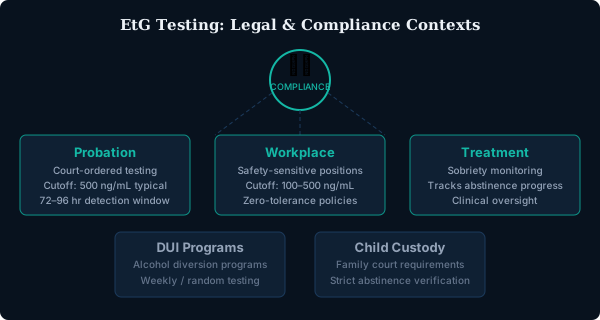
500 ng/mL is standard for pre-employment, workplace, and most clinical EtG tests. At this level, moderate drinking (3-5 drinks) typically clears within 36-52 hours.
100 ng/mL is used in probation, drug courts, treatment monitoring, and sobriety programs. The same 3-5 drinks may take 58-74 hours to clear at this threshold.
Ask whoever ordered your test, or check your program documentation, to confirm which level applies. When in doubt, assume 100 ng/mL - the more conservative estimate. For a personalized detection window, enter your specific details into the EtG calculator.
Step 2: Calculate Your Specific Window
Once you know your cutoff and you know what you drank (if anything), you can estimate how long your detection window actually runs. The key inputs:
Run these through the EtG detection time calculator to get an estimate based on pharmacokinetic research. This isn't a guarantee - individual metabolism varies - but it gives you a data-informed number to work with.
If the estimated window is close to your test date, add several hours of buffer. The model shows the expected average; your actual clearance may be somewhat faster or slower.
Step 3: Eliminate Incidental Ethanol Exposure
Several common products contain ethanol and can produce trace EtG - sometimes enough to trigger a positive at 100 ng/mL. In the week before your test:
Switch to alcohol-free mouthwash. Standard Listerine contains 21-26% ethanol. Regular gargling can produce urine EtG of 50-170 ng/mL - below 500 ng/mL threshold but potentially above 100 ng/mL. Alcohol-free alternatives are available from most pharmacy brands and are just as effective as antiseptics.
Check your medications. Some liquid medications use ethanol as a solvent or preservative. Cough syrups are the most common culprit. Check the inactive ingredients label - look for "alcohol" or "ethanol." If you need a medication that contains alcohol, inform your monitoring program in advance.
Avoid kombucha and non-alcoholic beer. These contain small amounts of ethanol from fermentation - typically 0.5% or less, but enough to register at 100 ng/mL if consumed in quantity. Play it safe and skip them during the monitoring period.
Normal cooking uses alcohol sparingly (wine-based sauces, for example) and are unlikely to produce detectable EtG at 500 ng/mL. At 100 ng/mL, very alcohol-heavy cooking may matter if you're consuming the dish in large quantities. Standard food preparation is generally fine.
Step 4: Understand Hydration
You've probably heard that drinking lots of water helps clear EtG. The truth is more nuanced.
Water doesn't speed up EtG elimination from your body. What it does is dilute your urine, which lowers the concentration per milliliter. A more dilute urine sample may read below the detection threshold slightly sooner - not because EtG left your system faster, but because each mL of urine contains less.
At 500 ng/mL, staying well-hydrated (not over-hydrated) may give you a modest benefit. At 100 ng/mL, the effect is less reliable. And over-hydration comes with risks: very dilute urine (creatinine below 20 mg/dL) can trigger an "invalid specimen" result requiring a retest, or raise flags about tampering.
Normal, appropriate hydration (enough water that your urine is pale yellow) is the right approach. Don't try to flood your system thinking it will mask a result.
Step 5: Know What Happens on Test Day
Specimen collection: EtG tests use standard urine collection. You provide a specimen in a collection cup; the facility splits it into two portions (one for initial testing, one sealed for potential confirmation testing). Follow the collector's instructions.
The initial test: Most facilities run an immunoassay screen first - a quick, low-cost test. Positive screens are then sent to a laboratory for confirmatory testing using LC-MS/MS (liquid chromatography-tandem mass spectrometry), which is much more specific and accurate.
Confirmatory testing: If your initial screen is positive, the second portion of your specimen is tested by the lab. This confirmatory test gives a quantitative result - a specific ng/mL concentration, not just positive/negative.
Your right to request confirmation: If you receive a positive result and believe it's in error, you can generally request that your sealed confirmation specimen be tested at a certified laboratory. This is your primary recourse if you believe the result is a false positive.
What You Cannot Do
Let's be direct about what doesn't work:
Diluting the specimen at collection - testing facilities check creatinine levels and specific gravity. Specimens that appear diluted are flagged, often resulting in an "invalid" finding and mandatory retest.
Using detox kits or adulterants - products marketed as "detox kits" don't speed up EtG elimination. Some contain agents intended to adulterate specimens; certified labs test for adulterants (oxidants, pH, specific gravity) and flag abnormal results.
Timing drinking to avoid the window - for random testing programs, there's no scheduled date to work backwards from. For scheduled tests, yes, timing matters - but the only reliable strategy is abstinence long enough before the test.
The Honest Bottom Line
For a scheduled EtG test with a known date, the reliable preparation is: don't drink, eliminate incidental ethanol exposure, stay normally hydrated, and understand your detection window. For monitoring programs with random or frequent testing, abstinence during the monitoring period is the only strategy with zero risk.
If you have a specific drinking event and a known test date, the EtG urine test calculator can give you a model-based estimate of your window. Use it to understand the biology - but treat the result as an average estimate, not a guarantee.
For more on what can cause unexpected false positives, see our guide on EtG false positive sources and how to avoid them. And for a detailed explanation of how the 100 vs 500 ng/mL cutoff affects your timeline, our cutoff level guide covers the full comparison.