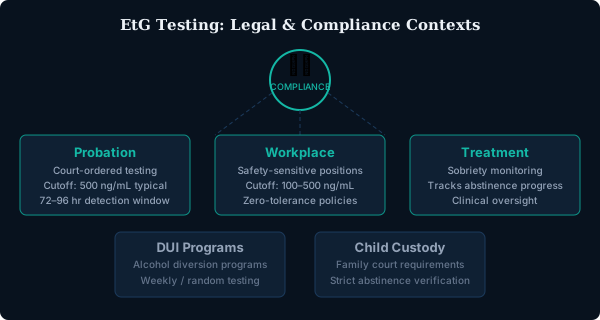
Standard 5-panel and 10-panel drug tests don't include alcohol. They screen for illicit substances, but ethanol - the most commonly misused substance in workplace safety incidents - gets missed entirely. EtG testing fills that gap for programs that specifically require alcohol abstinence or need retrospective detection beyond a breathalyzer's short window.
Why Standard Drug Panels Skip Alcohol
Most federally mandated drug testing panels (DOT, SAMHSA workplace guidelines) focus on Schedule I substances and common prescription drug misuse. Alcohol isn't screened in these standard panels for a practical reason: ethanol clears so quickly that a standard urine alcohol test administered 24 hours after an incident would catch very few drinkers.
The approach for alcohol in standard testing has historically been the breathalyzer - check for active intoxication at the time of testing, not past drinking. EtG testing changes this for programs that need to look further back.
Where Workplace EtG Testing Is Used
EtG urine testing has gained traction in several occupational contexts:
Post-incident testing. When an accident or safety incident occurs, EtG can reveal whether an employee consumed alcohol in the 24-72 hours before the event, even if a breathalyzer at the scene reads zero. This is particularly relevant for incidents investigated hours or days after they occur.
Random testing programs with alcohol components. Healthcare systems, transportation operators, heavy equipment firms, and energy sector employers sometimes run random EtG panels alongside standard drug screening. The goal is ongoing deterrence rather than incident-specific investigation.
Return-to-duty programs. Employees returning from leave related to alcohol issues often enter EtG-based monitoring as part of their return-to-work agreement. Frequency is typically weekly to monthly depending on the program.
Safety-sensitive positions. Commercial drivers (not covered by standard DOT alcohol panels beyond breathalyzer testing), airline crew, nuclear plant workers, and crane operators in some jurisdictions are subject to employer-administered EtG programs beyond federal requirements.
Standard Workplace EtG Cutoff: 500 ng/mL
Unlike probation and court monitoring programs that typically use 100 ng/mL, most workplace EtG programs use the 500 ng/mL cutoff established in SAMHSA's guidelines as standard for non-monitoring purposes. At this level:
For a safety investigation with a 24-48 hour gap between incident and testing, 500 ng/mL EtG catches most significant drinking events. For random testing with longer gaps between tests, it provides reasonable surveillance coverage.
Some employers in zero-tolerance safety environments use 100 ng/mL - these programs function more like court monitoring. Employees subject to 100 ng/mL workplace testing should understand that detection windows are 30-50% longer than the 500 ng/mL figures above.
Employees can use our EtG calculator to estimate their detection window at either cutoff level based on their specific drinking scenario.
Legal and Policy Considerations for Employers
EtG testing in employment is not the same as drug testing for illicit substances under DOT or SAMHSA frameworks. Some important distinctions:
No federal mandate. Unlike CDL holders subject to FMCSA alcohol testing requirements (breathalyzer-based), EtG workplace programs are employer-administered and governed by company policy, not federal law. This means program design - cutoff levels, frequency, chain of custody procedures - is the employer's responsibility.
ADA and alcohol use disorder. Employees with alcohol use disorder (AUD) are covered by the ADA. Employers may hold employees subject to alcohol policies to the same standards as other employees (i.e., being impaired at work is a terminable offense), but current treatment and recovery are protected. EtG programs should be applied consistently and documented carefully.
Medical review officer (MRO) involvement. DOT drug testing requires an MRO to review positive results and give the employee the opportunity to explain a legitimate medical explanation. For non-DOT EtG programs, MRO involvement is optional but advisable. It provides due process documentation and expert review of borderline or potentially incidental-exposure results.
Incidental exposure at 500 ng/mL. At 500 ng/mL, the incidental exposure concern (mouthwash, fermented foods, etc.) is minimal - most common exposures produce EtG far below this threshold. At 100 ng/mL, employer programs should have a protocol for evaluating reported incidental exposures to avoid wrongful discipline.
Designing an Effective Workplace EtG Program
For employers considering or already running EtG testing:
Define the testing trigger clearly. Is this post-incident only? Random? Both? Post-incident EtG fills the retrospective gap; random testing provides ongoing deterrence. The two serve different purposes.
Set a consistent cutoff. 500 ng/mL is standard and defensible for most workplace programs. 100 ng/mL is appropriate for zero-tolerance safety roles but requires more robust protocols for borderline results.
Chain of custody matters. EtG results used in employment decisions should follow documented chain-of-custody procedures from collection through lab analysis. Labs should be SAMHSA-certified.
Train supervisors on limitations. EtG detects past drinking - it doesn't measure impairment. A positive EtG result at 8 AM doesn't mean the employee drank that morning; it means they consumed alcohol at some point in the detection window. Training supervisors on this distinction prevents misapplication of results.
Communicate clearly to employees. Employees should know that EtG testing exists in their program, what the cutoff is, and what the detection window means. Clarity reduces disputes and sets accurate expectations.
For Employees Subject to Workplace EtG Testing
If you're an employee in a workplace EtG program and you want to understand your detection window for a specific scenario, the EtG detection time calculator gives you a model-based estimate. Enter your drink count, body weight, drinking duration, and the cutoff level your employer uses.
For more on how EtG compares to other alcohol testing methods used in employment contexts, see our comparison guide on EtG vs breathalyzers vs blood tests. And for details on how the cutoff level affects detection, our 100 vs 500 ng/mL guide covers the practical difference.
*Sources: SAMHSA Mandatory Guidelines for Federal Workplace Drug Testing Programs (2017); DOT 49 CFR Part 40.*